



Getting enough sleep is essential for your physical and mental well-being, but sleep quality depends on more than just the number of hours you spend in bed. While your mattress provides the foundation for support, your pillow plays an equally important role in keeping your head, neck, and spine properly aligned throughout the night.
A pillow that is too high, too low, or no longer provides adequate support can place your neck in an unnatural position. Over time, this may contribute to stiffness, shoulder discomfort, headaches, and frequent sleep interruptions. Choosing the right sleep pillow can help minimise pressure on your muscles and joints, allowing your body to relax more comfortably.
This guide explains how different types of bed pillows support various sleeping positions, what features to look for when choosing one, and how healthy sleep habits can work alongside proper support to improve your overall sleep experience.
Why Your Pillow Matters

Your spine has natural curves that should remain supported whether you're standing, sitting, or lying down. During sleep, your pillow fills the space between your head and the mattress, helping to keep your neck aligned with the rest of your spine.
When your sleeping posture is properly supported, your muscles can relax instead of working to compensate for poor alignment. This may reduce pressure on the neck and shoulders, making it easier to stay comfortable throughout the night.
By contrast, sleeping with the wrong pillow may lead to:
-
Neck and shoulder stiffness
-
Poor spinal alignment
-
Restless sleep and frequent repositioning
-
Morning headaches
-
General discomfort upon waking
However, even the best pillow cannot compensate for unhealthy bedtime habits. Factors such as screen time before bed, room temperature, stress, and inconsistent sleep schedules all influence how well you sleep. Practising good sleep hygiene can help create an environment that supports deeper, more restorative rest.
Choosing the Right Bed Pillow for Your Sleeping Position

There is no one-size-fits-all pillow. The best choice depends largely on how you naturally sleep, as different positions require varying levels of height and support to keep your spine in a neutral position.
Side Sleepers
Side sleeping is one of the most common sleeping positions and is often recommended because it helps maintain spinal alignment and may reduce snoring for some individuals.
Since there is more space between the head and the mattress in this position, side sleepers generally benefit from a pillow with a higher loft and firmer support. This helps prevent the head from tilting downward while keeping the neck aligned with the shoulders.
When choosing a pillow for side sleeping, look for:
-
Medium to high loft
-
Medium-firm to firm support
-
Materials that retain their shape throughout the night
Back Sleepers
Back sleepers require enough support to maintain the natural curve of the neck without pushing the head too far forward.
A pillow that is too thick may force the chin towards the chest, while one that is too flat can leave the neck unsupported. A medium-loft pillow generally provides balanced support, allowing the head to rest comfortably while maintaining proper alignment.
Back sleepers may prefer:
-
Medium loft
-
Moderate firmness
-
Even pressure distribution across the head and neck
Stomach Sleepers
Stomach sleeping can place additional stress on the neck because the head remains turned to one side for extended periods. While changing sleeping positions may help reduce strain, those who prefer sleeping on their stomach can improve comfort by using a thinner pillow.
A low-profile pillow helps reduce excessive neck extension and encourages a more neutral posture.
Suitable features include:
-
Low loft
-
Soft, compressible filling
-
Lightweight construction
Some stomach sleepers also find that placing a pillow beneath their hips helps reduce pressure on the lower back.
Understanding Different Types of Bed Pillows
The material inside a pillow affects how well it supports your head and neck, how long it maintains its shape, and how comfortable it feels over time.
Memory Foam Pillows
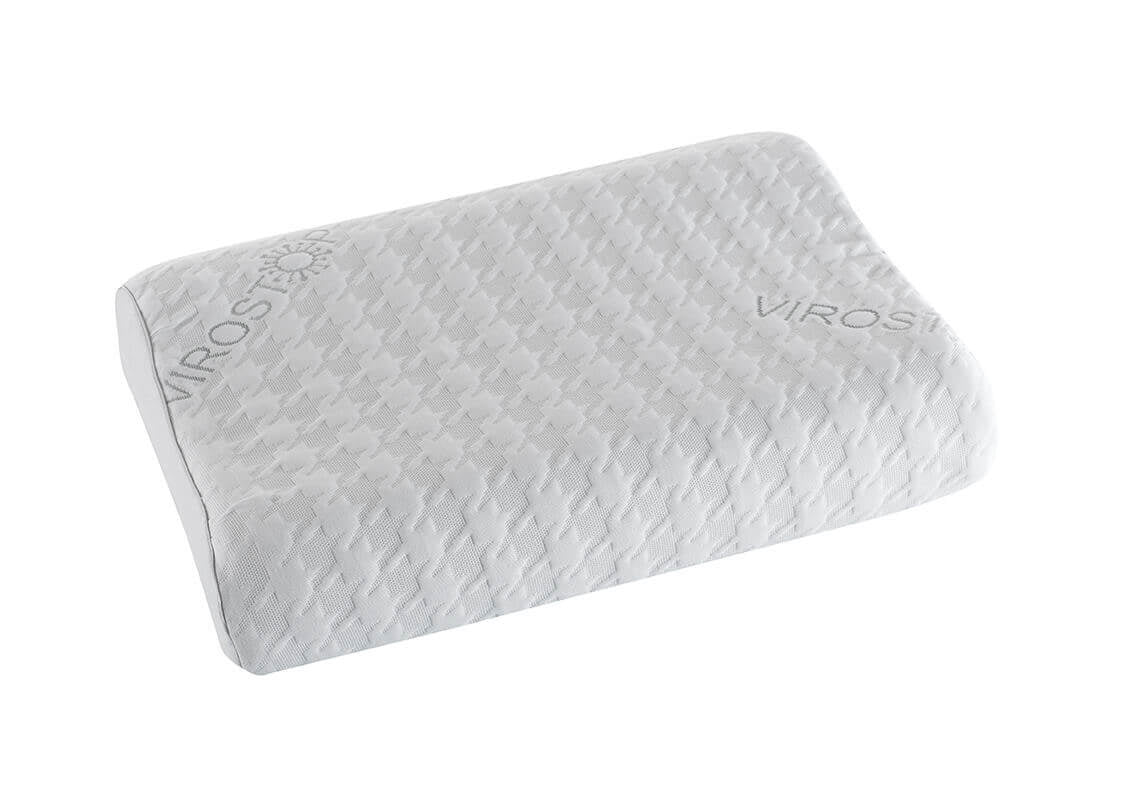
Memory foam moulds to the shape of your head and neck, distributing weight more evenly while providing consistent support. Because it contours to your body, it may help reduce pressure points and encourage better spinal alignment throughout the night.
Memory foam is often preferred by people who:
-
Experience neck or shoulder discomfort
-
Frequently change sleeping positions
-
Want a pillow that retains its shape
Latex Pillows
Latex pillows offer responsive support with a slightly firmer feel than memory foam. They quickly return to their original shape after pressure is removed and are generally more breathable, making them a good option for people who tend to sleep warm.
Fibre-Filled Pillows
Fibre-filled pillows are lightweight and soft, making them a popular everyday choice. They are available in a range of firmness levels and are often easier to care for than some specialty materials. However, they may require more frequent replacement as the filling compresses over time.
Ergonomic Pillows
For people who need more targeted neck support, an ergonomic pillow is designed to better support the natural curve of the cervical spine. These pillows often feature contoured shapes that help keep the head and neck in a neutral position, particularly for back and side sleepers.
Regardless of the material you choose, it's important to select bed pillows that suit your sleeping position, body frame, and personal comfort preferences rather than simply choosing the softest option.
How to Choose the Right Pillow
Finding the right pillow isn't simply about choosing the softest or most expensive option. Instead, consider how well it supports your preferred sleeping position while maintaining a neutral spine. The ideal pillow should feel comfortable from the moment you lie down and continue providing support throughout the night.
Here are a few factors to consider before choosing a pillow.
Pillow Loft
Loft refers to a pillow's height or thickness. The right loft depends largely on your sleeping position and body frame.
-
High loft: Generally suitable for side sleepers, as it fills the gap between the head and shoulders.
-
Medium loft: Often ideal for back sleepers who need balanced neck support.
-
Low loft: Better suited to stomach sleepers to minimise strain on the neck.
A pillow that is too high can tilt your head upwards, while one that is too low may allow it to fall backwards or sideways. Both situations can place unnecessary stress on the neck muscles.
Firmness
Firmness affects how much a pillow compresses under the weight of your head.
A softer pillow may feel comfortable initially but lose support throughout the night, while an overly firm pillow can create pressure around the head and neck. Choosing a firmness that matches your sleeping position and personal comfort preferences can help maintain better alignment.
Pillow Materials
Different filling materials provide different levels of support and breathability.
For example:
-
Memory foam contours closely to the head and neck.
-
Latex provides responsive support while remaining breathable.
-
Fibre-filled pillows offer a softer feel but may flatten more quickly over time.
The best choice depends on your comfort preferences, sleeping habits, and any support requirements you may have.
Signs It's Time to Replace Your Pillow
Even a high-quality pillow won't last forever. Over time, everyday use causes filling materials to compress, reducing their ability to support your head and neck properly.
You may want to replace your pillow if you notice:
-
It no longer returns to its original shape.
-
It feels lumpy or uneven.
-
You regularly wake up with neck discomfort.
-
It has visible stains, tears, or an unpleasant odour.
-
It has exceeded its recommended lifespan.
As a general guideline, most pillows should be replaced every one to two years, although this varies depending on the material and how well they are maintained.
Better Sleep Starts with Healthy Habits

The right pillow supports your body, but your daily habits also influence how well you sleep.
Simple lifestyle changes can improve both sleep quality and overall well-being, including:
-
Going to bed and waking up at the same time each day.
-
Limiting caffeine later in the day.
-
Reducing screen time before bedtime.
-
Keeping your bedroom cool, quiet, and dark.
-
Establishing a relaxing bedtime routine.
Research from a systematic review on pillow design and sleep quality suggests that pillow height, contour, and material may influence spinal alignment, reduce sleep-related neck pain, and improve overall sleep quality
When combined with proper sleep hygiene and a supportive pillow with the right height, these habits can help you wake up feeling more refreshed and reduce discomfort caused by poor sleeping posture.
Choosing the Right Pillow for Better Sleep
A bed pillow not only provides comfort; it also helps support your head, neck, and spine while you sleep. Choosing a pillow that matches your preferred sleeping position can improve spinal alignment, reduce pressure on your muscles and joints, and contribute to more restful sleep.
Whether you sleep on your side, back, or stomach, paying attention to pillow height, firmness, and material can make a noticeable difference in how you feel each morning. Alongside healthy sleep habits, replacing worn-out pillows when needed and choosing appropriate support are simple steps that can help create a more comfortable and restorative sleep environment.
